Before getting into Control Resonant itself, it is worth taking a moment to look at the journey that brought us here. It has been seven years since Control was released, and in many ways that game marked the beginning of an entirely new chapter for Remedy Entertainment.
A New Reality for Remedy
It wasn’t just another ambitious singleplayer title from a studio already known for its storytelling; it became the foundation for what would eventually be known as the Remedy Connected Universe, connecting Remedy’s games through characters, locations, events and references that encouraged players to look beyond the individual stories.
Of course, those connections go further back than Control. Long before the Remedy Connected Universe had a name, Quantum Break was already dropping hints that Remedy was interested in connecting its worlds, while Alan Wake 2 made sure that even the studio’s history with Max Payne wasn’t forgotten. Since then, Remedy has changed considerably. The studio has grown, expanded its ambitions and, perhaps most importantly, become a fully self-publishing developer. For a studio that continues to invest heavily in ambitious, narrative-driven, predominantly single-player AAA games, that is a remarkable position to be in, particularly at a time when the industry is moving in very different directions.
It is also worth mentioning the journey towards Control Resonant itself. Those who followed the marketing campaign will have seen that Remedy went all in. An ARG, real-life events, projections on buildings, physical displays and posters, influencers, original music and plenty of other surprises made the launch feel like much more than a traditional marketing campaign. Remedy has always understood that its games are worlds you can immerse yourself in, and this campaign extended that idea beyond the game itself.
We were fortunate enough to play Control Resonant more than a week before release, and we want to thank Remedy for giving us that opportunity. As fans who have followed the studio for many years, we genuinely appreciate how often Remedy gives its community a look behind the scenes and trusts dedicated fans with its games before release. It is something we don’t take for granted.
There is another reason why this particular review has been an interesting one to write. Over the past year, regular readers may have noticed that we haven’t been quite as present as we usually are when it comes to the latest developments around Remedy. There is a very good reason for that: I became a father. As wonderful as that is, it has also changed the way I approach games. Free time is more limited, which means I have become much more conscious of what I spend that time on. I want games that allow me to put them down and pick them up again without having forgotten everything that happened. I appreciate quests and pieces of content that can be completed in manageable sessions, while still giving me enough depth to feel like I am actually progressing.
At the same time, I still want to be challenged and surprised. What I have considerably less patience for these days are games that overwhelm you with dozens of similar objectives and a seemingly endless list of things to do, only for the experience to eventually become repetitive. With that in mind, Control Resonant surprised me in a very positive way. If you recognise yourself in that situation, I think you will find a lot to enjoy here. Between the endless remakes, remasters and sequels that dominate much of the industry, Control Resonant manages to feel remarkably fresh. It takes the elements of the original Control that worked, retains what made that game special, and then changes almost everything else.
A sequel that doesn’t feel like one
That is perhaps the most interesting thing about Control Resonant. It is a direct continuation of Control, but it doesn’t feel like a conventional sequel. The story moves forward, many familiar characters return and the events of the first game remain important, yet Remedy has made a conscious effort to give this game its own identity. Jesse is no longer our protagonist, The Oldest House is no longer the sole focus, guns have been replaced by melee combat, the RPG systems have been expanded and the game introduces considerably more challenging boss encounters.
Instead, we play as Dylan Faden. The game wastes very little time establishing its premise. Jesse uses The Abbarant, a new type of melee weapon, to stab Dylan, awakening him from his coma. He soon discovers that Jesse has left The Oldest House because she believes an enormous catastrophe is about to unfold. Nobody knows where she has gone or exactly what she has discovered, leaving Dylan to investigate what happened and, ultimately, find his sister.
That premise allows Remedy to finally explore a question that many Control players will have wondered about since the original game: what happens if the Hiss escapes the Oldest House?
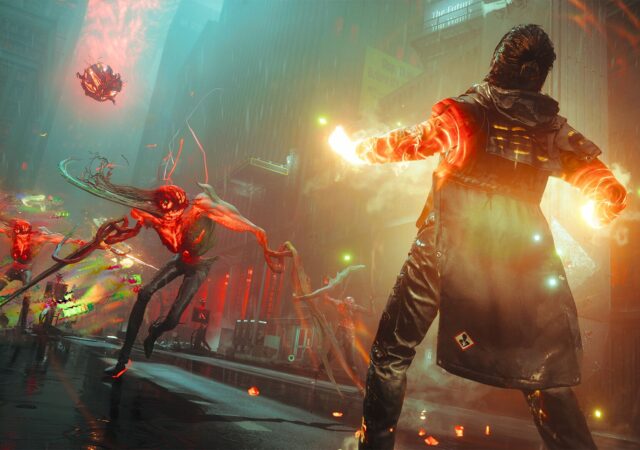
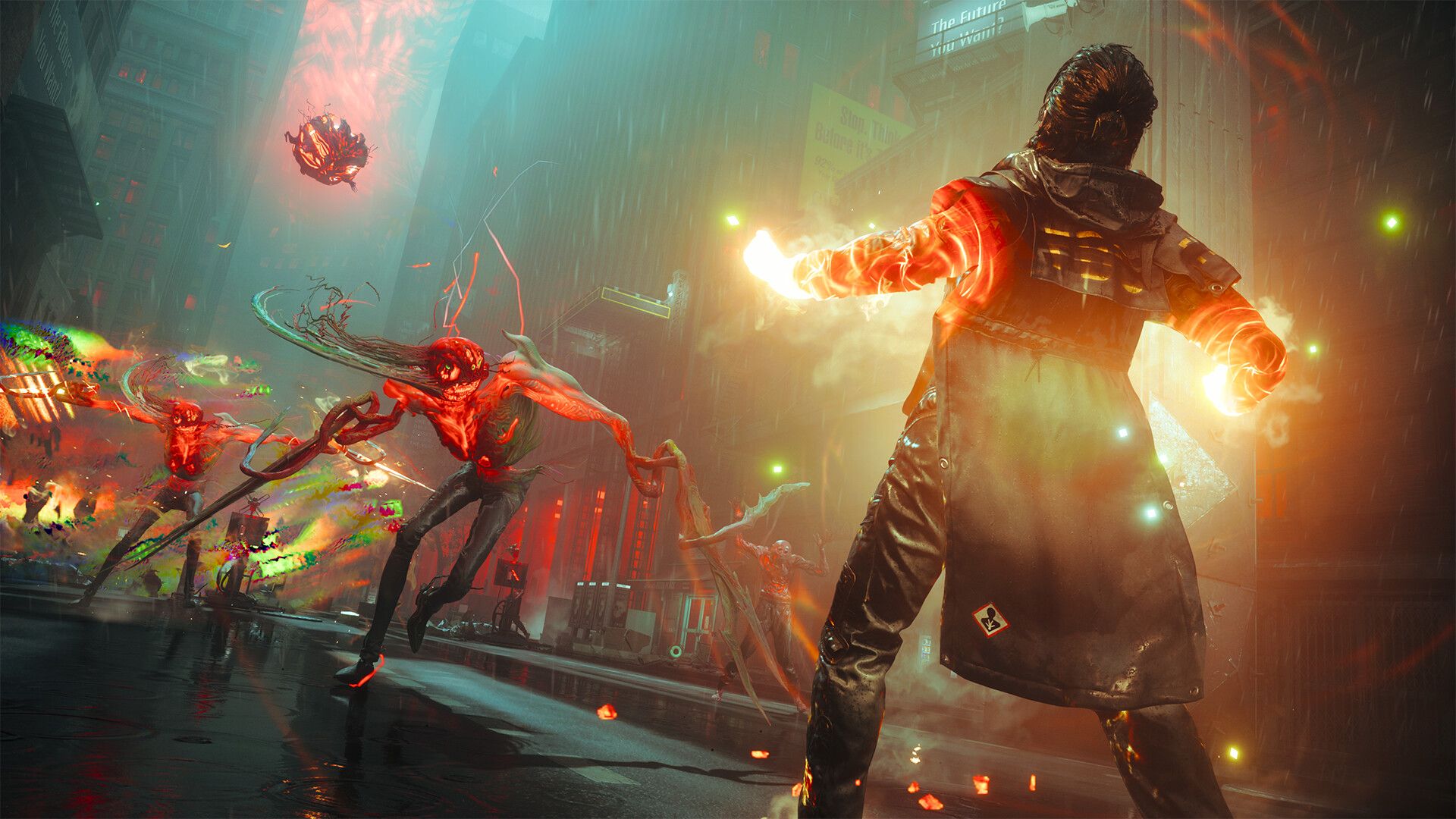
The answer is one of the game’s most interesting ideas. Manhattan has been taken over by the Hiss and another hostile paranatural entity, and the result is a city that has been distorted into something that barely resembles reality. Buildings and environments fold in on themselves, spaces change in ways that shouldn’t be possible and there are moments that feel as though they have been taken straight out of Inception. It is an excellent setting for a Remedy game because it allows the studio to take the surreal architecture and reality-bending ideas of Control and apply them on a much larger scale.
Dylan gradually acquires new abilities that make it possible to navigate this strange version of Manhattan. Double jumping, levitation and a grappling-like movement ability open up previously inaccessible areas and make movement a much more important part of exploration. I would strongly recommend unlocking these abilities as quickly as possible, because once the movement system really opens up, the game starts to feel considerably more liberating.
Navigation isn’t always perfect, however. There were several occasions where I found myself genuinely unsure where the game wanted me to go next. In some cases, the quest marker didn’t quite point towards the location I expected, while other objectives could perhaps have been communicated more clearly. Normally this wouldn’t bother me too much, especially in an age where finding a solution online takes seconds, but because we were playing the game before release, that wasn’t an option. There were moments where I genuinely wondered whether the problem was actually me; perhaps I had missed an important piece of dialogue or simply hadn’t been paying enough attention.
More dialogue, more character
There is considerably more dialogue in Control Resonant, and Dylan is given more freedom in how he responds to the characters around him. Your choices don’t radically alter the main story, but they do influence the way characters perceive and respond to Dylan. If you approach conversations in a dismissive or unnecessarily hostile way, you shouldn’t necessarily expect the person on the other side of that conversation to become particularly friendly towards you.
It is a relatively subtle system, but I appreciated it because it gives the relationships between characters more weight. Rather than simply clicking through dialogue to get to the next objective, your behaviour contributes to the impression you form of these characters and, to some extent, the relationship you develop with them. It isn’t a revolutionary dialogue system, but it fits the game and gives the quieter moments between the action a little more depth and meaning.
“They aren’t afraid to take an idea that sounds completely ridiculous and somehow turn it into something that works.”
The same applies to the side missions. Control Resonant contains a number of them, and I would strongly recommend taking the time to complete them. Without getting into spoiler territory, these are some of the places where Remedy’s creativity is most visible. The strange situations, humour, absurdity and unexpected turns that fans have come to associate with the studio are all here. Some of these missions feel like reminders of why Remedy’s games stand out in the first place: they aren’t afraid to take an idea that sounds completely ridiculous and somehow turn it into something that works.
The Connected Universe feels strangely distant
For players who haven’t experienced the first Control, there is a recap video available from the main menu, and the game does a reasonable job of explaining what is happening. Through conversations, the main story and the lore you can discover throughout the world, there is enough information to understand the broad situation. That said, Resonant is very much a continuation of the first game, and players who know what happened before will undoubtedly get more out of it.
In fact, if you still haven’t played the original Control, I would strongly recommend doing so before starting Resonant. Not because the sequel is impossible to understand without it, but because so much of the context, character history and mystery surrounding this world originates there.
This was also the part of Resonant I approached with the greatest curiosity. I have followed the Remedy Connected Universe for years, and I was genuinely excited to see where Remedy would take it next. My feelings about the story are therefore somewhat mixed. It does move the story forward, but perhaps not as far as I had hoped. There is a major twist towards the end, although I had worked out where things were heading relatively early, and several existing storylines remain unresolved.
More importantly, I found myself missing the wider Remedy Connected Universe. There are certainly references to other Remedy titles, but if you are going into Control Resonant specifically because you want to learn more about Alan Wake, you may come away disappointed. The same is true for several of the mysteries introduced in the original Control. Ahti, the Black Pyramid, The Board and The Former are all mentioned or referenced, but we don’t learn as much about them as I had hoped.
That feels like a missed opportunity to me. Not because I think Remedy needs to explain everything, quite the opposite. The mystery is part of what makes these games interesting. But there is a difference between leaving a mystery open and leaving it almost untouched. As someone who plays Remedy’s games partly because I want to understand how these seemingly disconnected pieces fit together, I wanted Resonant to take another significant step into that larger universe.
The Abbarant changes everything
One of the biggest departures from the original game is the combat. Remedy is known for making action games, but Control Resonant takes a very different approach to how that action works. Jesse’s Service Weapon has been replaced by The Abbarant, a melee weapon that can change form depending on how you want to play.
It can become a powerful hammer capable of dealing enormous amounts of damage, or transform into a whip-like weapon that trades some of that power for speed. You can also customise your combinations and finishers, allowing you to build a combat style that feels more personal than the original game’s gunplay.
You’ll need to experiment, because Control Resonant is not an easy game. Combat is challenging from relatively early on, and the game gradually teaches you a rhythm that requires you to recognise enemy patterns, manage your positioning and decide when to attack and when to wait. The Resonant encounters take this even further and can feel much closer to a Dark Souls or Returnal boss fight than anything found in the original Control. Learning the patterns and recognising the right moment to strike becomes essential.
Fortunately, Remedy has also included an excellent Assist Mode. This is something I was particularly happy to see. You can make yourself invulnerable or enable one-hit kills, but you can also make much more subtle adjustments to things such as damage output or the speed at which finishers become available. There is no punishment for using it: trophies remain available and the game doesn’t otherwise penalise you.
For me, that is important. I’m not someone who plays games to prove that I can beat the hardest possible version of them. I play games to relax, explore and experience their worlds. Sometimes I want the challenge, but sometimes I simply want to feel powerful and confident that I can get through an encounter without becoming frustrated because one small mistake sends me back to a checkpoint. The fact that Resonant allows me to make that choice without taking anything away from players who want the full challenge is something I genuinely appreciate.
A world that demands to be explored
Visually, Control Resonant is an impressive achievement. The environments are incredibly detailed, the animations are fluid and the particle effects can be spectacular. The world also feels considerably more colourful than the often grey and oppressive environments of the original Control, which makes sense given that so much of this game takes place outside The Oldest House.
The visual highlight for me comes when the game takes you high above Manhattan, far beyond the roof of The Oldest House. This is where the scale of the game really comes together and Remedy is given the freedom to completely unleash its imagination. The movement, architecture, effects and surrealism combine into something that feels genuinely liberating.
“Remedy has always had a particular talent for making those environments feel like more than a collection of strange visual ideas.”
There are plenty of games that experiment with dreamlike environments, but Remedy has always had a particular talent for making those environments feel like more than a collection of strange visual ideas. The world of Control Resonant feels as though it operates according to rules that we don’t understand, rather than simply looking unusual for the sake of it. That distinction is important, and it is one of the reasons Remedy’s games are so difficult to replicate.
A new direction that still feels like Remedy
Control Resonant is not perfect. The navigation can occasionally be confusing, some of the story developments are easier to predict than I would have liked, and as a long-time follower of the Remedy Connected Universe, I wanted considerably more movement on some of the mysteries that have been building for years. But those criticisms shouldn’t overshadow what Remedy has accomplished here.
The most impressive thing about Control Resonant is that it doesn’t feel like Remedy simply took the original Control and made it bigger. Instead, the studio has taken the foundation of that game and used it to build something that feels genuinely different. The protagonist has changed, the setting has changed, the combat has changed and the way you move through the world has changed, yet somehow the game still feels unmistakably like a Remedy title. That is not an easy balance to achieve, and something even the game’s director Mikael Kasurinen was nervous about, as he wrote in the review guidelines I was given.
And perhaps my experience playing it as a new father has made that particularly apparent. I don’t have the same amount of time to spend gaming that I once did, so I have become much more selective about the experiences I want to invest in. Control Resonant works surprisingly well in that context. Its missions are substantial without constantly feeling like chores, the world gives you a reason to explore it and the story provides enough intrigue to keep you wondering what is going on without demanding that you spend every free hour of your week playing it. Most importantly, it still manages to surprise me. Control Resonant carries the DNA of its predecessor, but it isn’t afraid to evolve beyond it, and makes you wonder; how to top this in another sequel?
But that, ultimately, is what Remedy does best.